



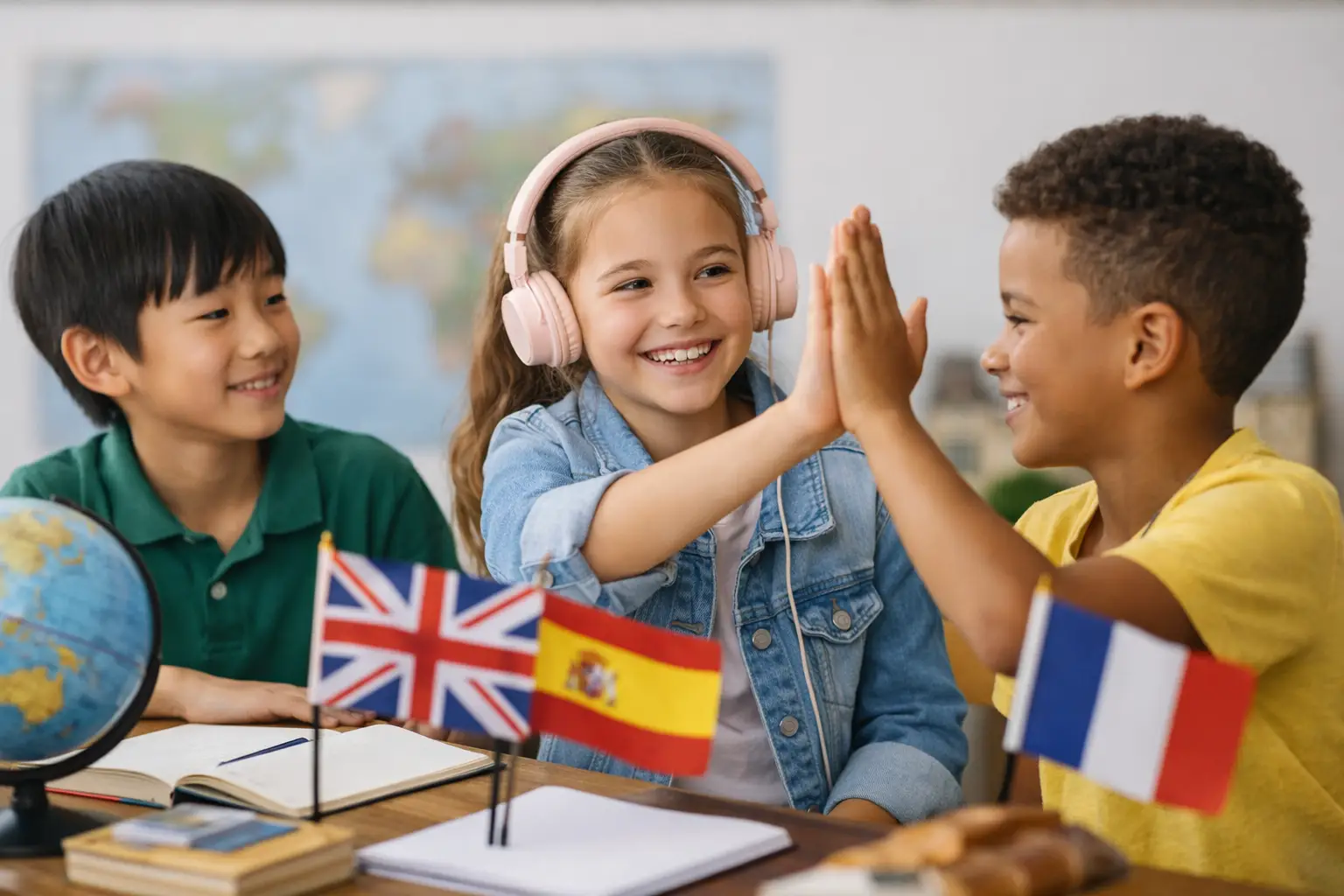
A child who can greet a new classmate in Cantonese, explain a science project in English, or order food while traveling has gained more than vocabulary. They have practiced the confidence to participate. The best language courses for children turn that confidence into a skill through clear structure, encouraging instruction, and goals a young learner can recognize.
For families, choosing a course can feel more complicated than choosing a language. Children learn at different speeds, school requirements vary, and a fun first experience can shape whether a child sees language learning as a chore or a source of pride. The right program meets a child where they are, then gives them a realistic path forward.
What Makes a Language Course Right for a Child?
A strong children’s language course is not simply an adult class with easier worksheets. Young learners need lessons built around their developmental stage, attention span, and reason for learning. A preschooler beginning Mandarin needs a different approach from a teenager preparing for IB Chinese or an English writing assessment.
The best programs balance speaking, listening, reading, and writing rather than treating language as a memorization exercise. Children should hear useful language, use it in guided conversation, and revisit it often enough for it to become familiar. Games, stories, role-play, visuals, and short projects can all help, but they should support a defined learning objective. Enjoyment matters most when it leads to measurable progress.
Class size and teaching format matter too. Private lessons can be especially helpful for children who need focused support, have a busy activity schedule, or are working toward a specific academic target. Small group classes offer a different advantage: children practice taking turns, responding naturally, and communicating with peers. Neither format is automatically better. The best choice depends on the child’s confidence, current level, and goal.
Best Language Courses for Children Start With a Clear Goal
“Learn Chinese” is a valuable ambition, but it is too broad to guide a course choice. Families get better results when they identify what success should look like over the next few months or school year.
For a child growing up in Hong Kong, Mandarin or Cantonese lessons may support daily conversations with relatives, classmates, and the wider community. Chinese writing classes can strengthen character recognition, sentence construction, and school performance. For international-school students, a course aligned with IB Chinese, AP Chinese, GCSE, or CIE expectations can provide targeted support without losing sight of practical communication.
English courses can serve equally different needs. One child may need more confidence speaking in class, while another needs help organizing essays, improving grammar, or preparing for an English-language exam. A course should make that distinction early. General communication lessons are useful for fluency, but they may not be enough for a student who needs academic writing strategies and timed practice.
Global languages such as French, Spanish, Japanese, Korean, German, Italian, Russian, Thai, or Arabic can open another path. Children may be motivated by travel, heritage, an upcoming school subject, or genuine curiosity about a culture. At the beginner level, motivation is a powerful asset. The course should protect it by helping children use meaningful phrases quickly instead of delaying communication until they have mastered every rule.
Look for Structure Without Making Lessons Feel Rigid
Children benefit from knowing what they are working toward. A well-planned course introduces language in manageable stages, reviews earlier material, and lets students see improvement. Parents should be able to understand the course pathway: what the child is learning now, what comes next, and how progress will be checked.
That does not mean every lesson should feel like a test. A younger child may show progress by responding to a story, naming objects, or completing a short dialogue. An older child may write a paragraph, give a presentation, or handle a conversation with less prompting. The method changes with age, but the expectation stays the same: learning should lead to greater independence.
Ask how the school assesses progress. Regular feedback is more useful than a single high-pressure test because it identifies gaps before they become frustrating. It also helps parents distinguish between a child who is naturally quiet and one who is genuinely struggling with the material.
Choose Teachers Who Can Build Skill and Trust
A qualified teacher brings subject knowledge, but children also need a teacher who can adjust explanations, pace, and activities without lowering expectations. The best instructors make corrections clearly and kindly. They create a class environment where a child can try a new sentence, make a mistake, and try again without embarrassment.
This is particularly important for children who have had a discouraging experience at school or who are entering a new language for the first time. Confidence is not built by telling a child they are talented. It grows when they can see that practice leads to improvement.
Before enrolling, consider whether the instructor can teach the specific course goal. A conversational Mandarin teacher may be an excellent fit for a young beginner, while a student facing HSK or academic Chinese requirements may need an instructor experienced in exam skills, reading comprehension, and writing conventions. Specialized support is not excessive when a student has a defined academic milestone ahead.
Match the Schedule to Real Family Life
The most thoughtfully designed course will not deliver results if attendance is inconsistent. Families often underestimate the value of a schedule that is sustainable alongside school, homework, sports, and travel. A weekly lesson with realistic practice between classes is usually more effective than an ambitious plan that becomes difficult to maintain.
Flexible options can make a meaningful difference for working parents and students with demanding school calendars. Private instruction may allow a course to move at the child’s pace, while group lessons can create a regular social routine. Online learning can be practical for some families, but younger children may need more active guidance and shorter sessions to stay engaged. Consider the child’s ability to focus independently before choosing a format.
Practice should also fit naturally into the week. Ten minutes of listening, reading aloud, reviewing flashcards, or using new phrases at home can reinforce classroom learning. Parents do not need to become language teachers. A simple question such as “Can you teach me three new words from class?” gives a child an opportunity to lead and celebrate progress.
Watch for Progress Beyond Test Scores
Grades and exam results matter, especially when a child is preparing for HSK, IELTS, school assessments, or secondary-school applications. Still, they are only part of the picture. A course is working when a child begins volunteering answers, understands familiar instructions without translation, or chooses to use the target language outside class.
For parents, these small changes are often the clearest signs of growth. A child who once avoided speaking may start with a single sentence. Another may move from copying characters to writing an original message. Those moments show that language is becoming usable, not just recognizable.
At International Language Centre, children’s programs can be tailored around practical communication, school support, and exam-focused goals across Chinese, English, and global languages. The strongest starting point is a conversation about the learner rather than a one-size-fits-all course label.
A language course should give a child more than another item on a busy calendar. It should give them a voice they are willing to use – at school, at home, and wherever their future takes them.