



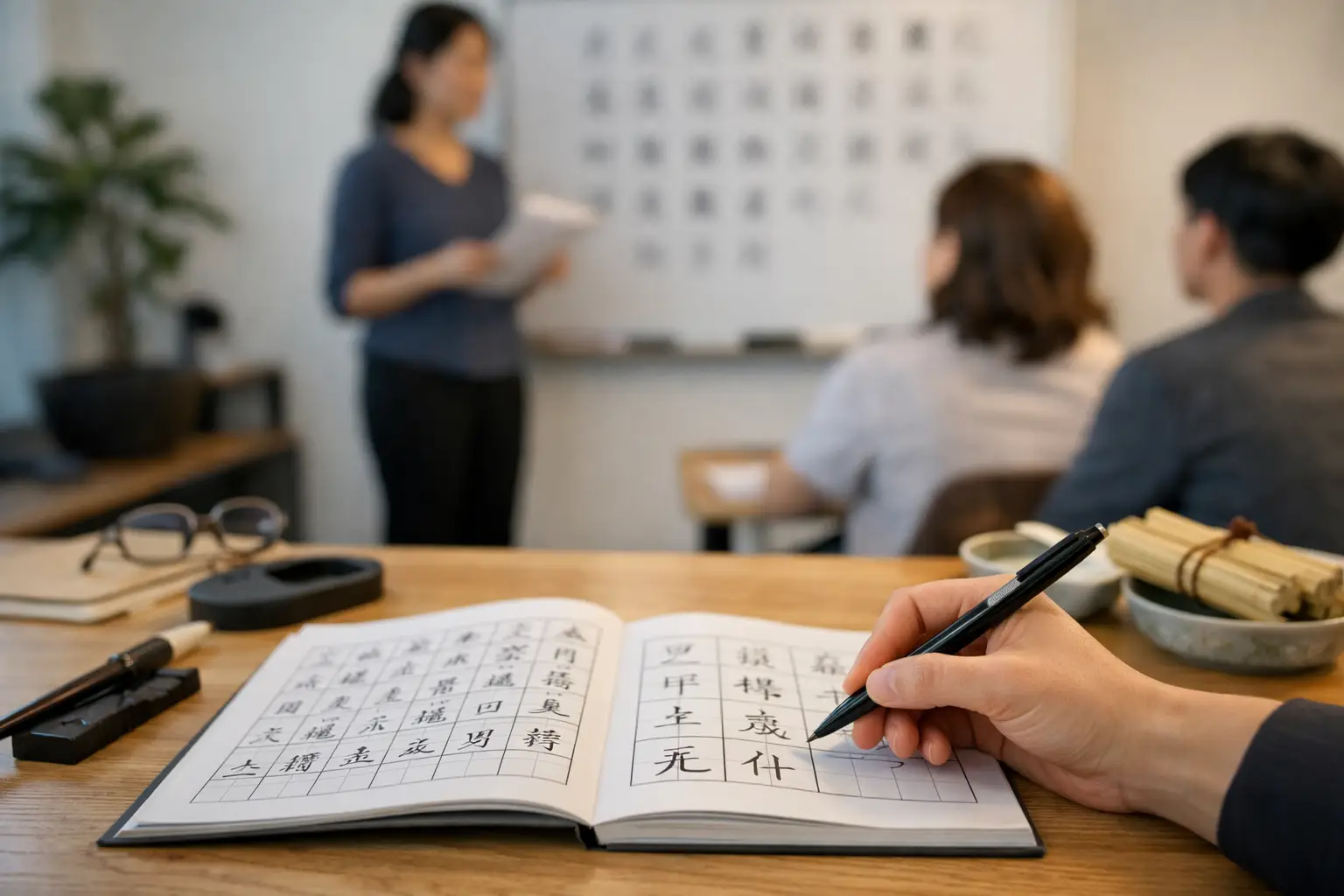
A student can speak comfortably in Mandarin class, follow a meeting, and even read basic messages – then freeze when asked to write a paragraph. That gap is common, and it is exactly why Chinese writing classes matter.
Writing asks for a different level of control: characters, structure, tone, and accuracy all have to work together on the page.
For many learners, writing is the skill that turns passive knowledge into active command. It is where vocabulary becomes usable, grammar becomes visible, and progress becomes measurable.
If your goals include academic success, workplace communication, exam preparation, or stronger literacy in Chinese, focused writing instruction is not an extra. It is often the missing piece.
Why Chinese writing classes make such a difference
Speaking allows room for hesitation and approximation. Writing does not. When you write in Chinese, you have to choose the right characters, organize ideas clearly, and produce language that fits the task. That could mean a short personal response, a business email, an exam essay, or a school assignment.
This is why learners often plateau without structured support. You may know the meaning of a word but not its correct written form. You may recognize a character when reading but be unable to reproduce it accurately.
You may understand sentence patterns but still struggle to build a coherent paragraph. Chinese writing classes address those gaps directly rather than hoping they improve on their own.
Good instruction also saves time. Practice alone can reinforce mistakes if no one is correcting stroke order, word choice, sentence flow, or register. A qualified teacher helps you notice patterns, fix weaknesses early, and build habits you can actually rely on.
What strong Chinese writing classes should teach
Not all writing courses focus on the same outcome. Some are built for beginners who need a foundation in characters and sentence formation. Others are designed for school-age learners, exam candidates, or professionals who need polished written communication. The right program depends on your level and your purpose.
At the foundation stage, learners need to understand how characters are formed and remembered. That includes stroke order, radicals, structure, and frequency-based vocabulary. This part can feel slow, but it matters. Without that base, writing becomes memorization without retention.
As learners progress, the focus should shift toward sentence control and paragraph development. This is where students learn how to connect ideas naturally, vary sentence patterns, and write with more accuracy. A strong class does not just assign writing. It teaches how writing works.
At a higher level, instruction should become more task-specific. A teenager preparing for IB or GCSE Chinese needs different support from a working adult writing emails or reports. One may need argument structure and text analysis.
The other may need concise workplace wording, formal tone, and practical business vocabulary. The best courses recognize that writing goals are not one-size-fits-all.
Core skills that matter most
Useful writing instruction usually combines four areas: character accuracy, grammar control, organization, and feedback. If even one is missing, progress slows. A learner with strong ideas but weak characters will still struggle. So will a learner with good vocabulary but poor structure.
Feedback is especially important. It should go beyond marking answers wrong or right. The most helpful teachers explain why something sounds unnatural, where a sentence loses clarity, and how to revise it. That revision process is where real improvement happens.
Who benefits most from Chinese writing classes
The obvious answer is students, but the real answer is broader. Writing matters anywhere Chinese is used as a tool for achievement.
School-age learners often need writing support because classroom expectations rise quickly. Reading and oral participation may stay manageable for a while, but formal writing demands precision. Students in international schools may also need help with specific exam formats, literary responses, or composition tasks that require more than conversational Chinese.
University-bound learners benefit for a different reason. Academic success depends on being able to present ideas clearly, respond to prompts, and write with structure under time pressure. Writing classes can strengthen not only language ability but also confidence during assessments.
Professionals often come to writing later, when spoken ability is no longer enough. A manager may need to draft messages to colleagues, prepare simple written updates, or communicate more effectively with clients and teams. In those cases, writing instruction is tied directly to credibility and efficiency.
Families also see strong value in Chinese writing support, especially when children are growing up in multilingual environments.
Speaking at home does not always translate into literacy. A child may understand Chinese well but still need structured practice to write accurately and independently.
How to choose the right Chinese writing classes
The best course is not the one with the broadest promise. It is the one that matches your actual objective.
If you are a beginner, look for a class that builds writing from the ground up rather than assuming you can already form characters. If you are preparing for an exam, choose a course that includes timed practice, correction, and explicit work on required formats. If your goal is work-related, the course should include practical writing tasks you will actually use.
Teaching format matters too. Private lessons can move faster and target specific weaknesses. Group classes can be highly motivating and cost-effective, especially when learners share similar goals.
Neither format is automatically better. It depends on your schedule, budget, and how much individualized correction you need.
Flexibility is another practical issue. Adults balancing work and family responsibilities tend to improve more in programs they can attend consistently. A perfect syllabus is less useful than a realistic schedule you can maintain.
Questions worth asking before you enroll
Before joining a program, ask how writing is taught, not just whether writing is included. Does the class cover planning, drafting, and revision? Are corrections detailed? Is the curriculum aligned with school standards, exam criteria, or real-world communication tasks? These details tell you far more than a general promise of improvement.
It is also worth asking how progress is measured. Writing can feel subjective, so clear benchmarks help. You should be able to see improvement in character accuracy, sentence range, task completion, and overall clarity over time.
What progress really looks like
One reason learners get discouraged is that writing improvement is not always dramatic week to week. It often shows up in smaller wins first. You write faster. You make fewer character errors. Your sentences become less repetitive. You need less guessing.
That kind of progress matters because it compounds. A learner who gains control over basic sentence patterns can start building stronger paragraphs. A learner who becomes more secure with characters can focus more attention on content. Writing gets easier when fewer mental resources are spent on the basics.
There is also a confidence shift that comes with regular guided practice. Many learners begin Chinese writing classes thinking they are simply bad at writing. In reality, they have often just lacked structure, feedback, and repetition in the right order. Once those pieces are in place, improvement becomes much more realistic.
Why writing support should be tailored
Chinese writing is not a single skill. It changes with age, purpose, and learning background. A heritage learner may need help organizing ideas and formalizing language. A complete beginner may need character construction and survival-level sentence writing. An advanced learner may need style control and exam technique.
That is why tailored instruction is so effective. It respects what the learner already knows while targeting what is actually holding them back. In a city like Hong Kong, where learners often move between English, Mandarin, and Cantonese across school, work, and daily life, that kind of focused support can make a real difference.
International Language Centre approaches language training with that practical mindset: clear goals, flexible formats, and instruction shaped around real outcomes. For writing, that means helping learners produce work they can use confidently in class, at work, and beyond the classroom.
Chinese writing classes are most valuable when they do more than teach characters on a page. They help you think more clearly in the language, express yourself with greater precision, and meet the demands of school, work, and daily communication with more confidence. If writing has been the skill you keep putting off, it may be the one that moves your Chinese forward the fastest.