



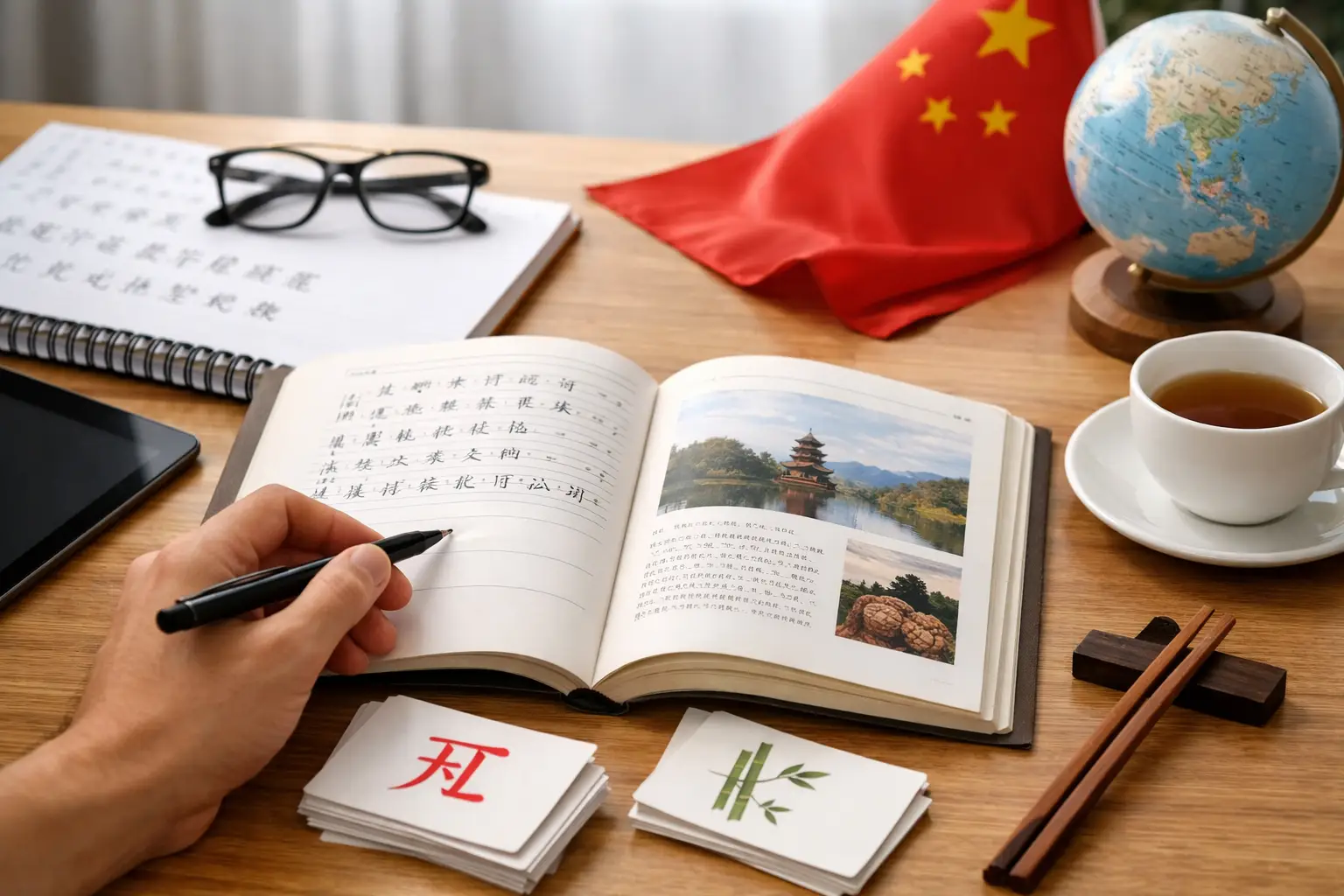
A lot of IB Chinese students work hard but still feel unsteady when exam season gets close. The reason is usually not effort. It is preparation that is too broad, too passive, or too focused on what feels comfortable. If you are wondering how to prepare for IB Chinese, the best approach is to study with the exam in mind from the start – not just to improve your Chinese in general, but to improve the exact skills the IB rewards.
IB Chinese can feel demanding because it tests more than vocabulary and grammar. You need to read with precision, respond under time pressure, organize ideas clearly, and show control of tone, format, and interpretation. That means your preparation has to be structured. Once you know what the exam is actually asking from you, your study becomes far more efficient.
Start by understanding what IB Chinese really tests
Before building a study plan, get clear on your course level and components. IB Chinese ab initio, Language B, and Literature do not ask for the same kind of performance. Even within Language B, Standard Level and Higher Level have different expectations for reading depth, written response, and oral control.
This matters because many students prepare in a vague way. They memorize word lists, read random passages, or write occasional essays without checking whether those tasks match the assessment criteria. That can create the illusion of progress while leaving major gaps untouched.
A stronger starting point is to break the course into its core skill areas. Most students need to develop reading comprehension, writing accuracy, idea organization, listening or oral responsiveness depending on the paper, and topic-based vocabulary. If one area is consistently weaker, it can affect the whole result. A student with strong ideas but weak grammar may lose marks for clarity. A student with good vocabulary but poor planning may write responses that drift off task.
How to prepare for IB Chinese with a realistic study plan
The best study plan is one you can actually maintain. For most students, that means short, focused sessions across the week instead of occasional long cramming sessions. Chinese responds well to repetition, especially when you are building character recognition, sentence patterns, and confidence in writing.
Start by mapping your week around three types of study. First, spend time on input – reading model texts, reviewing vocabulary by topic, and listening to Chinese that matches your course level. Second, do active output – timed writing, spoken responses, and question practice. Third, include correction work – reviewing mistakes and rewriting weak answers. This last part is often where real improvement happens.
A realistic schedule might include four to five sessions a week of 30 to 60 minutes. One session could focus on reading, one on writing, one on oral practice, and the others on review and timed work. If your school workload is heavy, consistency matters more than volume. A focused 40 minutes is better than three distracted hours.
Build vocabulary by theme, not as isolated words
One of the fastest ways to improve in IB Chinese is to organize vocabulary around common themes. Topics such as identity, education, technology, health, relationships, environment, and culture appear again and again. If you only memorize single words without context, you may recognize them in isolation but struggle to use them accurately in writing or speaking.
Instead, learn vocabulary in clusters. For each theme, collect useful nouns, verbs, adjectives, and sentence patterns. Then practice them in short sentences and paragraph responses. This helps you move from recognition to control.
It is also worth learning functional language, not just topic words. Phrases for comparing, explaining causes, giving opinions, contrasting ideas, and concluding a response can raise the quality of both speaking and writing. Many students know enough Chinese to answer a question, but not enough connective language to answer it well.
Strengthen reading by training yourself to notice patterns
Reading in IB Chinese is not just about translating individual words. Strong readers track tone, identify purpose, notice structure, and infer meaning from context. That is why simply looking up every unknown character is not the most effective method.
When you practice reading, first skim the passage for the main idea. Then read more closely and mark signal words, repeated ideas, and shifts in opinion or time. Ask yourself what the writer is trying to do. Are they informing, persuading, describing, or reflecting? These patterns often help you answer questions even when some vocabulary is unfamiliar.
It also helps to practice under time limits. Untimed reading can build understanding, but exam reading requires speed and judgment. A balanced approach works best: some sessions for deep analysis, and some for timed accuracy.
Writing practice should be timed, corrected, and repeated
Writing is where many students either gain control or lose marks quickly. A common mistake is writing too little and assuming that reading alone will improve written performance. It usually does not. To write better, you have to write regularly.
For IB Chinese, quality matters more than length. Examiners want relevance, organization, appropriate format, and language control. So when you practice, simulate real tasks. Write responses that match the text type required in your course, whether that is an email, article, blog post, speech, or essay.
After each piece, do not just look at the grade and move on. Review what went wrong. Did you answer the question directly? Did you use the correct register? Were your ideas repetitive? Did grammar errors make meaning unclear? Then rewrite one paragraph or the full response using corrections. That second version is where improvement becomes visible.
Prepare for the oral by making speaking routine
Students often postpone oral practice because it feels uncomfortable. That is exactly why it should become part of your weekly routine. Spoken Chinese improves through active use, not silent review.
If your IB Chinese course includes an oral component, prepare by speaking on familiar themes in a clear structure. Start with simple frameworks: introduce the topic, give your view, support it with examples, and finish with a brief conclusion. Recording yourself can be useful because it reveals hesitation, repetition, and pronunciation issues that are easy to miss in the moment.
You do not need perfect fluency to perform well. You need clear communication, relevant content, and enough control to respond naturally. That is an important distinction. Some students wait to speak until they feel fully ready. Progress comes faster when you speak before that point and refine from there.
Use past paper practice strategically
Past papers are valuable, but only if you use them well. Doing large numbers of papers without reflection can become mechanical. The goal is not just completion. The goal is pattern recognition.
When you work with past questions, look for recurring task types, common themes, and the language demands behind each question. Track where you lose marks. Maybe you misread instructions. Maybe your writing lacks development. Maybe your answers are accurate but too simple for your level.
A smart method is to alternate between full timed papers and focused skill drills. One week, do a complete reading or writing task under exam conditions. Another week, isolate a weak area such as text organization, transitions, or summary responses. This keeps your preparation targeted instead of repetitive.
Get feedback before the final stretch
Self-study can take you far, but outside feedback often makes the difference between decent preparation and high-level performance. Chinese is a subject where small issues in wording, register, or sentence structure can affect marks even when the basic meaning is clear.
A teacher or experienced tutor can show you patterns you may not notice on your own. They can also help you adjust your preparation based on your specific IB level and current performance. For students balancing school, activities, and university applications, this kind of guided support can make study time much more efficient.
If you are studying in a busy environment like Hong Kong, where students often manage packed schedules and competitive academic goals, structure matters even more. The students who improve steadily are not always the ones studying the longest. They are usually the ones studying with clarity.
What to do in the last few weeks
As the exam gets closer, your focus should narrow. This is not the time to collect endless new materials. It is the time to sharpen what you already know.
Review your strongest and weakest themes. Revisit corrected writing pieces. Practice speaking on likely topics. Do timed reading and writing tasks, then analyze them carefully. Keep vocabulary review active, but do not let memorization replace application.
Just as important, protect your confidence. Last-minute panic leads many students to mistake stress for productivity. A calm, organized review plan will usually produce better results than frantic overstudying.
IB Chinese rewards students who prepare with purpose. If you build a consistent routine, practice the exact skills being assessed, and learn from correction instead of avoiding it, your progress becomes measurable. Start with one focused change this week, and let that momentum carry you forward.