



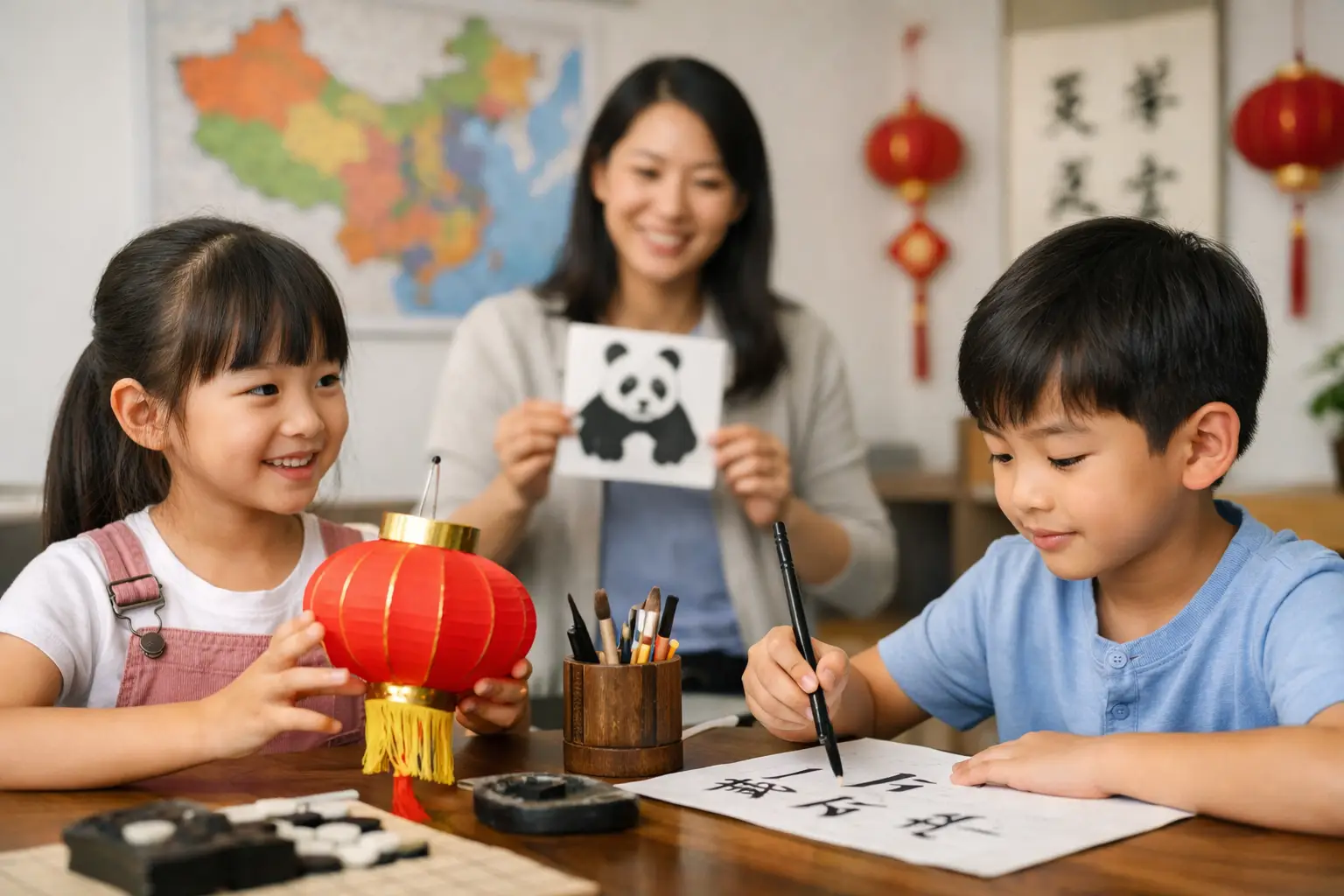
A child who can say a few words in Chinese is practicing a subject. A child who can ask for help, answer confidently, and recognize everyday characters is building a skill that carries into school, travel, and daily life. That is why parents looking at kids Chinese classes often realize very quickly that not all programs are aiming for the same result.
Some classes are designed to keep children busy for an hour. Others are built to develop real communication step by step. If your goal is long-term progress, the difference matters. The best program is not always the one with the flashiest materials or the biggest promises. It is the one that matches your child’s age, current level, learning style, and practical goals.
What good kids Chinese classes actually teach
Strong kids Chinese classes do more than introduce vocabulary lists. They help children connect listening, speaking, reading, and writing in a way that feels manageable. For younger learners, that usually starts with sound recognition, speaking patterns, and clear comprehension before heavy writing demands are added. For older children, especially those preparing for school-based Chinese requirements, the class should become more structured and academically focused.
This balance matters because children do not all learn Chinese the same way. A five-year-old beginner may need songs, movement, repetition, and short speaking tasks. A ten-year-old in an international school may need help with character recognition, sentence building, and oral confidence. A teenager preparing for IB, AP, or GCSE-related Chinese work may need a program that is less playful and more targeted.
A quality course recognizes that progression is not random. It should move from simple, usable language toward stronger reading, better pronunciation, and more confident conversation. Children need clear building blocks. Without that structure, they may enjoy the class but struggle to retain what they learn.
Why the right class depends on your child’s goal
The first question is not simply, “Does my child need Chinese?” The real question is, “What kind of Chinese does my child need right now?” For some families, the priority is conversational Mandarin for daily life. For others, it is Cantonese for local integration. Some want stronger Chinese writing for school. Others need a solid foundation before exam preparation becomes relevant.
This is where parents often make a costly mistake. They choose a class based on age alone, when they should also be looking at outcome. Two children in the same age group may need completely different lessons. One may be a total beginner who needs confidence and speaking exposure. Another may understand spoken Chinese but need help with reading and writing. A third may already be ahead verbally but need correction in tone accuracy and sentence structure.
When a program is aligned with the goal, children feel progress early. That early success is important. It keeps motivation high and reduces the frustration that can make language learning feel like a chore.
How to evaluate kids Chinese classes before enrolling
A good class should be easy to describe in practical terms. Parents should be able to understand what the child will actually learn over the next few months. If the answer is vague, the program may be vague too.
Look first at placement. A serious language academy should not push every child into the same level. Children need to be placed by ability, not just by age or school year. Proper placement helps avoid two common problems: boredom for stronger learners and discouragement for beginners.
Next, ask how the lesson is structured. A useful class usually includes guided speaking, listening practice, vocabulary review, and age-appropriate literacy work. If the child is ready for reading and writing, those elements should be introduced carefully rather than rushed. If the child is still in the early stages, oral communication should be built first with consistency.
Teacher quality matters just as much as curriculum. Children need instructors who can keep lessons focused without making them intimidating. The best teachers know how to correct mistakes clearly, encourage participation, and keep each child engaged. In language learning, warmth and structure need to work together.
Parents should also ask how progress is tracked. Not every child needs formal testing, but there should be a way to measure development. That may include teacher feedback, level benchmarks, speaking checks, reading milestones, or writing samples. Progress should feel visible, not mysterious.
What to avoid in children’s Chinese programs
It is easy to be impressed by classes that look fun on the surface. Fun helps, especially for younger learners, but entertainment alone is not the goal. If a child leaves class happy but cannot recall key vocabulary, answer basic questions, or recognize material from previous weeks, the class may not be doing enough.
Another warning sign is overload. Some programs move too fast, especially in reading and writing. Children end up memorizing characters without understanding how to use them. This can create a short-term appearance of achievement, but it often weakens confidence over time.
You should also be cautious about one-size-fits-all teaching. Children vary widely in attention span, confidence, school exposure, and home language environment. A program that does not adapt to these differences may leave gaps that become more obvious later.
The best classes do not try to impress parents with volume. They focus on retention, correct usage, and steady progress.
Group or private kids Chinese classes?
This depends on your child’s personality and objective. Group classes can be excellent for motivation, interaction, and routine. Children hear peers using the language, practice turn-taking, and build confidence speaking in front of others. For many learners, this social environment supports progress.
Private lessons can be the better choice when a child has highly specific needs. That might include catching up in school, preparing for an exam pathway, working through reading or writing difficulties, or building confidence after a negative learning experience. One-to-one teaching also allows the pace to be adjusted more precisely.
Neither format is automatically better. Group lessons often work well for children who benefit from shared energy and structured progression. Private lessons are often more effective when the goal is targeted improvement in a shorter time. In some cases, a combination works best.
Why consistency matters more than intensity
Parents sometimes assume faster progress comes from packing in as much content as possible. In reality, children usually learn Chinese better through steady, repeated exposure than through occasional heavy study. One well-designed weekly class supported by review and practice can be more effective than bursts of intense learning followed by long gaps.
Consistency helps children absorb sounds, patterns, and characters gradually. It also reduces stress. Language confidence grows when children feel familiar with the process. They start recognizing words more quickly, responding with less hesitation, and using what they know more naturally.
This is especially important for families balancing school, activities, and busy schedules. A realistic plan that a child can sustain is more valuable than an ambitious plan that becomes difficult to maintain.
Choosing kids Chinese classes in Hong Kong
For families in Hong Kong, the choice often carries extra weight because Chinese is not just an academic subject. It can affect school performance, social confidence, and daily communication. That means the right class should reflect local realities as well as broader language goals.
Some children need Mandarin for international school pathways or future exams. Others need Cantonese to feel more comfortable in their surroundings. Some require support in Chinese writing as academic demands increase. A strong academy should be able to identify which path makes the most sense and adjust the learning plan accordingly.
This is where experience across different learner profiles becomes valuable. International Language Centre, for example, works with children from varied school systems and language backgrounds, which allows programs to be tailored with clear purpose rather than generic instruction.
The best class builds confidence, not just knowledge
Parents often start by asking how much Chinese their child will learn. A better question is how confidently their child will use it. Confidence changes everything. It affects whether a child speaks up, keeps trying after mistakes, and sees Chinese as a strength instead of a barrier.
The right class makes progress feel achievable. It gives children a structure they can trust, teachers who guide them well, and lessons that connect to real communication. That is when language learning becomes more than another after-school activity. It becomes part of how a child grows.
If you are comparing options, look beyond promises and focus on fit. The best kids Chinese classes are the ones that meet your child where they are and move them forward with clarity. A child who feels capable today is far more likely to become fluent tomorrow.