



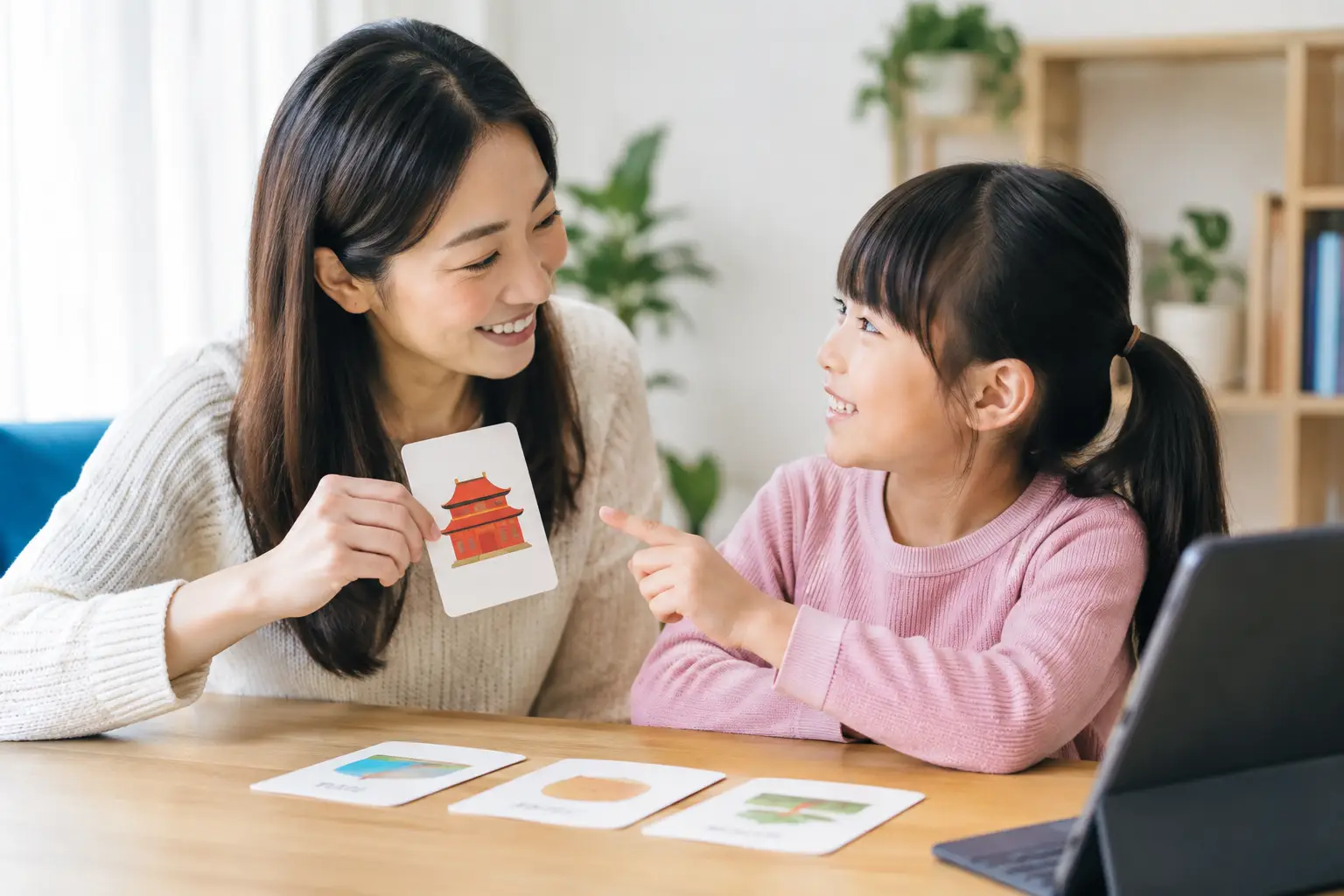
A child who can greet a grandparent, order a favorite snack, or tell a friend what happened at school has a real reason to speak Cantonese. That is the starting point for parents wondering how to teach kids Cantonese: build the language into meaningful moments, not just study time. Children learn fastest when Cantonese feels useful, warm, and connected to people they care about.
For families in Hong Kong, Cantonese can open everyday conversations, strengthen family relationships, and help children feel more at home in their community. For international families, it also gives children a practical local skill while developing the confidence that comes from communicating across cultures. The goal is not instant perfection. It is steady progress from understanding to speaking, then reading and writing when the child is ready.
Start With a Clear, Real-Life Goal
“Learn Cantonese” is too broad for most children. A more effective goal is specific and visible: introduce yourself, name foods at dim sum, follow simple classroom instructions, describe a weekend, or speak with relatives for five minutes.
Choose a goal that matches your child’s age and daily life. A preschooler may begin with greetings, colors, family words, and requests such as “I want water.” An elementary-age child may be ready to talk about school, hobbies, and feelings. Older children often need Cantonese for social confidence, local school life, or communication with extended family.
Keep the first target small enough to achieve within a few weeks. Early success changes a child’s attitude. When they realize they can use Cantonese to get a response, make someone laugh, or complete a simple task, the language becomes theirs rather than another subject on the schedule.
How to Teach Kids Cantonese Through Daily Routines
Short, repeated interactions are more valuable than an occasional long lesson. Pick one or two reliable moments each day and reserve them for Cantonese. Breakfast, the walk to school, bath time, and bedtime all work because the vocabulary naturally repeats.
At breakfast, name foods, ask what your child wants, and use the same phrases every day. On the way home, talk about what they can see: cars, buses, rain, shops, and people. At bedtime, use a simple sequence of questions: What was fun today? Who did you play with? What do you want to do tomorrow?
Begin with language your child can understand from context. Point, gesture, show the object, and repeat the phrase naturally. Rather than translating every sentence into English, make the meaning clear through the situation. If your child answers in English at first, respond positively and offer the Cantonese version without turning the exchange into a correction.
For example, if your child says, “I’m tired,” you might answer with the Cantonese phrase for “You’re tired?” and continue the conversation. This keeps communication flowing while giving them a useful model.
Teach Listening Before Expecting Perfect Speech
Cantonese has tones, and parents often worry that children will say a word with the wrong tone. Tones matter, but constant correction can make a child hesitant to speak. At the beginning, focus on comprehension, confidence, and frequent exposure. Clear pronunciation improves through hearing accurate Cantonese repeatedly and using it in low-pressure situations.
Songs, chants, and short stories are especially effective because rhythm makes sound patterns memorable. Choose material with repetition rather than long, complicated narratives. Revisit the same song or book across several days. Familiarity gives children the confidence to join in, predict the next line, and notice details they missed before.
It also helps to keep language input consistent. If one parent or caregiver can comfortably use Cantonese, they might use it during designated routines. A child does not need every family conversation to happen in Cantonese. What matters is that the child hears enough consistent, understandable language to recognize patterns and begin responding.
Make Cantonese Something Children Can Do
Children rarely stay motivated by vocabulary drills alone. They want action, choice, and a reason to communicate. Turn practice into small challenges: find three red objects, give a toy shopkeeper an order, act out a restaurant scene, or explain how to play a game.
Role-play works particularly well for school-age learners. Set up a pretend café, market, doctor’s office, or MTR journey. Give your child a simple mission, such as asking for a drink, buying fruit, or finding the right stop. Offer only the words they need for that task, then repeat the game another day with one new phrase.
Games should support communication rather than distract from it. A matching game is useful when it leads to phrases such as “Where is it?” or “I found it.” A scavenger hunt is stronger when children must listen to clues and report what they found. The best activities make Cantonese the tool for completing something enjoyable.
Build Vocabulary in Useful Groups
Teaching random word lists can create recognition, but children need connected language to speak. Group words around experiences they know: family, food, clothes, weather, school, feelings, transportation, and weekend activities.
Introduce a small set of words, then add phrases immediately. Instead of teaching only the word for apple, teach “I want an apple,” “This apple is sweet,” and “Do you want an apple?” This approach shows children how vocabulary works in conversation.
Avoid introducing too much at once. Five to eight useful words and phrases practiced over several days will usually produce more progress than twenty words taught once. Repetition is not boring when the context changes. A child can use the same food words in a song, at the table, in pretend play, and while shopping.
Include Reading and Writing at the Right Time
Spoken Cantonese and written Chinese are related, but they are not identical. Children who are learning to speak Cantonese do not need to master Chinese characters immediately. Starting with listening and speaking reduces pressure and gives written language a stronger foundation later.
When a child shows interest in print, introduce characters connected to words they already know. Their name, family members, common foods, and simple signs are a good place to begin. Older children who need academic Chinese may benefit from a more structured pathway that develops speaking, reading, writing, and school-relevant vocabulary together.
The right balance depends on the child’s goals. A child learning Cantonese to speak with grandparents may prioritize conversation. A student preparing for a local or international curriculum may need systematic reading and writing support much sooner. Neither route is better in every case. The most effective program matches the language skills a child will actually use.
Create a Safe Space for Mistakes
A child who fears being corrected will often stay quiet, even when they know the answer. Praise effort specifically: “You remembered that word,” “I understood what you meant,” or “That was a clear question.” Then model a more natural version if needed.
Try not to interrupt every error. If the message is clear, respond to the meaning first. Save focused correction for one or two points after the activity, especially when the child is relaxed. This approach protects confidence while still moving accuracy forward.
It is also normal for children to go through quiet periods. They may listen for weeks before speaking more freely. This does not mean learning has stopped. Listening builds the internal map they need before words come out comfortably.
When Structured Lessons Make a Difference
Home practice is powerful, but it can be difficult to maintain when parents have demanding work schedules or do not speak Cantonese confidently themselves. A qualified instructor can provide a clear sequence, accurate pronunciation models, age-appropriate activities, and regular feedback on progress.
Small-group lessons add another advantage: children see peers using Cantonese for games, teamwork, and conversation. Private lessons can be especially useful when a child has a specific goal, needs extra support, or benefits from a pace tailored to their personality and school demands.
At International Language Centre, children’s Cantonese lessons can be tailored around practical communication, confidence, and academic needs. The strongest results come when lessons and home routines reinforce each other, even if practice at home is only ten minutes a day.
Give your child a reason to use one new Cantonese phrase today. A small, successful conversation is not a minor step – it is the beginning of a language they can carry into family life, friendships, school, and the wider world.