



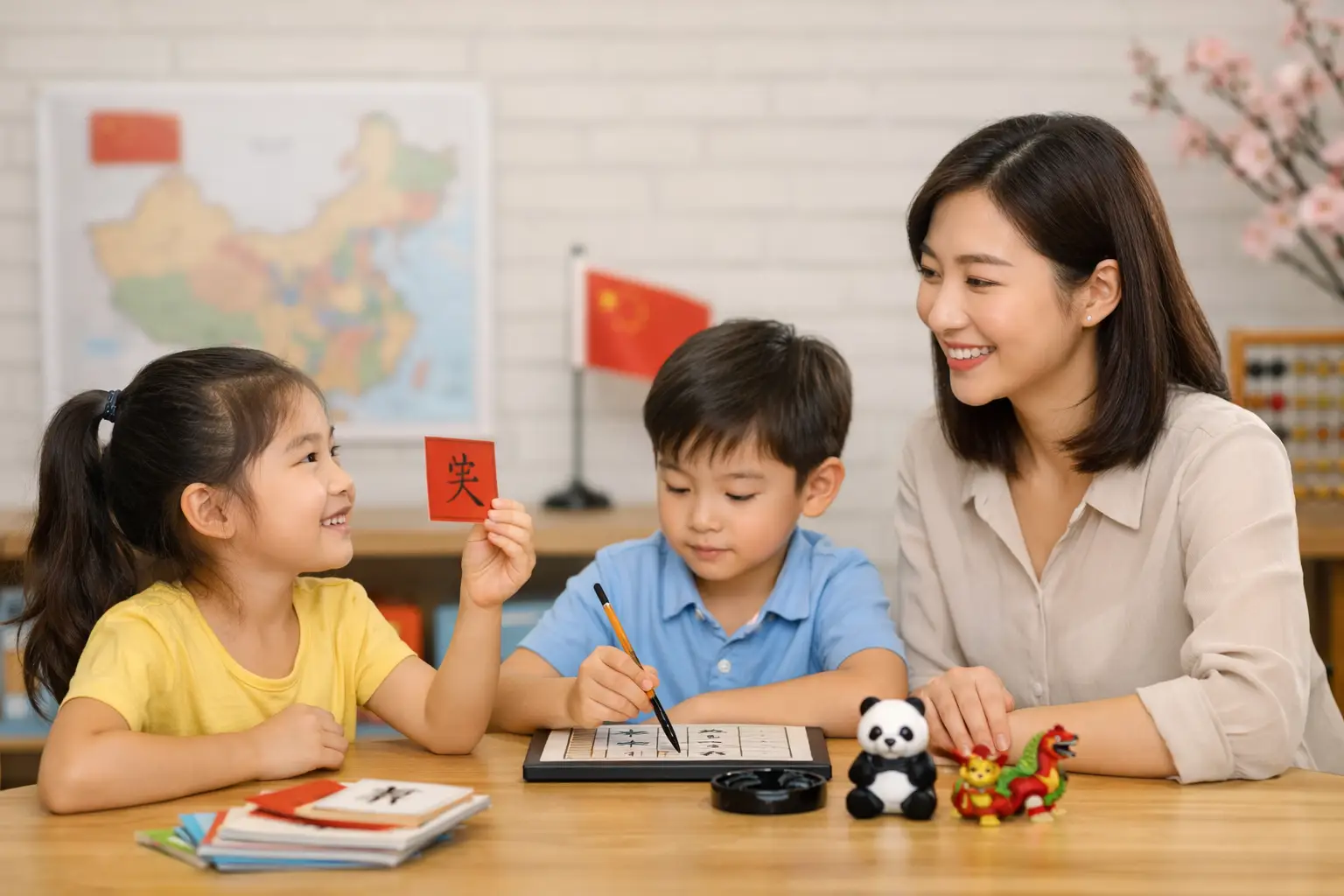
A child who can greet a grandparent, order a snack, or answer a teacher in Mandarin has gained more than a new vocabulary word. They have practiced confidence in a language that can shape school success, family connections, and future opportunities. This guide to kids Mandarin programs helps parents look beyond colorful worksheets and choose learning that delivers meaningful progress.
For many families, the question is not whether Mandarin matters. It is how to make learning productive without turning every lesson into another source of pressure. The right program combines clear structure with age-appropriate energy, giving children regular chances to listen, speak, read, and, when ready, write.
Start With Your Child’s Real Mandarin Goal
“Learn Mandarin” can mean very different things for different children. A preschooler may need confidence with songs, classroom instructions, and everyday conversation. An elementary school student may need to strengthen Chinese reading and writing for school. A teenager may be preparing for IB Chinese, AP Chinese, GCSE/CIE Chinese, or an HSK examination.
A strong program begins with a realistic starting point. Is your child a complete beginner, a heritage speaker who understands Mandarin but answers in English, or a student who can speak comfortably but struggles with characters? These profiles need different teaching priorities. Placing a child in a class based only on age can leave them bored, overwhelmed, or reluctant to participate.
Ask the school how it assesses new learners and how often progress is reviewed. A useful assessment should consider listening, speaking, reading, and writing separately. Children often develop these skills unevenly. For example, a child may recognize many spoken words at home but need targeted support to form sentences independently or read characters accurately.
What Effective Kids Mandarin Programs Include
Children learn best when language has a purpose. They need to use Mandarin to tell a story, describe a picture, ask for help, play a role, or share an opinion. Memorization has a place, particularly for vocabulary and characters, but it should support communication rather than replace it.
Speaking and Listening From the First Lessons
Early Mandarin lessons should include plenty of guided speaking. Teachers can introduce useful sentence patterns, model accurate pronunciation, and create low-pressure opportunities for children to respond. This matters because Mandarin tones can feel unfamiliar to English-speaking learners. Children do not need perfection immediately, but they do need attentive feedback before inaccurate habits become difficult to change.
Look for lessons where students hear Mandarin naturally and use it often. A class that includes games, pair work, role-play, and short presentations can keep younger learners engaged while building practical fluency. For older children, conversations about school, hobbies, travel, and current interests make vocabulary more memorable.
Character Learning With a Clear System
Reading and writing Chinese characters require patience, repetition, and a sensible sequence. Programs should teach character recognition alongside meaning, pronunciation, and common usage. Simply copying a character many times may improve handwriting, but it does not always create lasting recognition or reading confidence.
For beginners, programs may introduce pinyin as a bridge to pronunciation while gradually building character knowledge. For students already studying Chinese at school, the focus may shift toward reading comprehension, writing organization, grammar, and vocabulary needed for academic tasks. Neither approach is automatically better. The right pace depends on the child’s age, previous exposure, and goals.
Lessons That Match Developmental Stage
A five-year-old and a fourteen-year-old should not experience Mandarin in the same way. Younger children benefit from routines, movement, visuals, songs, and brief activities that reinforce core language. Older learners can handle more explicit grammar instruction, extended reading, structured writing, and exam-style practice.
The best teachers adjust without lowering expectations. A playful lesson can still have clear objectives, and an academic course can still feel encouraging. Children are more likely to persist when they understand what they are working toward and can see evidence of improvement.
Group Classes or Private Lessons?
Both formats can work well, but they serve different needs. A small group class gives children social motivation. They hear peers using Mandarin, practice turn-taking, and often gain confidence through shared activities. It can be an excellent choice for beginners, especially when students are closely matched by level and age.
Private lessons offer more flexibility and a more personalized pace. They can be particularly valuable for a child catching up in school, preparing for an examination, managing a busy family schedule, or working on a specific challenge such as Chinese writing. One-to-one instruction also gives the teacher more time to correct pronunciation and adapt materials to the learner’s interests.
There is a trade-off. Group classes can make communication feel more natural, while private lessons can move faster when a child needs focused support. Consider your child’s personality as well as their academic needs. A confident child may thrive in a lively group, while a quieter child may first need individual guidance before feeling ready to speak in front of others.
Questions Parents Should Ask Before Enrolling
A polished course description is not enough. Ask practical questions that reveal how the program operates day to day. What does a typical lesson look like? How are students grouped? What materials are used? How does the teacher give feedback? How will parents know whether their child is progressing?
It is also worth asking whether the curriculum has a defined pathway. Children benefit when each level builds logically on the last, rather than repeating disconnected topics. A structured pathway should show how basic conversation develops into stronger listening comprehension, reading ability, writing control, and, where relevant, exam readiness.
For school-age learners, ask how the program relates to their current curriculum. Support should complement school learning without duplicating it blindly. A student in an international school may need help with Chinese as an additional language, while another may require advanced support for literature, composition, or formal assessments.
Make Mandarin Part of Everyday Life
Weekly lessons create momentum, but small moments between classes make the language stick. The goal is not to turn home into a second classroom. It is to give Mandarin a natural place in family routines.
Try using a few familiar phrases during meals or getting ready for school. Let your child teach you a new word from class, label a handful of everyday objects, or choose a simple Mandarin story to revisit together. Older children may enjoy keeping a short journal, recording a voice message, or watching age-appropriate content with a specific language goal, such as identifying five new expressions.
Keep expectations manageable. If Mandarin becomes associated only with correction or homework battles, motivation drops quickly. Praise effort, participation, and willingness to try. A child who uses a new sentence imperfectly is still taking a meaningful step toward fluency.
Watch for Progress Beyond Test Scores
Grades and assessment results are useful, especially for students with academic or exam goals. But they are not the only signs of success. Listen for whether your child starts responding more quickly, uses longer sentences, recognizes familiar characters in context, or feels less hesitant when speaking.
Progress is rarely perfectly linear. Children may seem to plateau while they are absorbing new structures or adjusting to more complex characters. Consistent attendance, clear teacher feedback, and practice that fits the child’s level usually matter more than rushing through a syllabus.
A quality program should be able to explain what your child can do now, what they are learning next, and what support will help them move forward. That clarity gives families confidence and helps children see Mandarin as a skill they can steadily build.
Choosing a Program With Long-Term Value
The right Mandarin course should meet your child where they are while leaving room for the next stage of growth. At International Language Centre, children’s Mandarin learning can be tailored around practical communication, Chinese literacy, academic support, or exam preparation, with experienced teachers helping students progress at a pace that suits them.
The most encouraging sign is not a child who never makes mistakes. It is a child who is willing to speak, curious enough to ask questions, and proud to notice how much more they can understand. Choose a program that protects that confidence, and Mandarin can become a capability your child carries into school, relationships, and a wider world.