



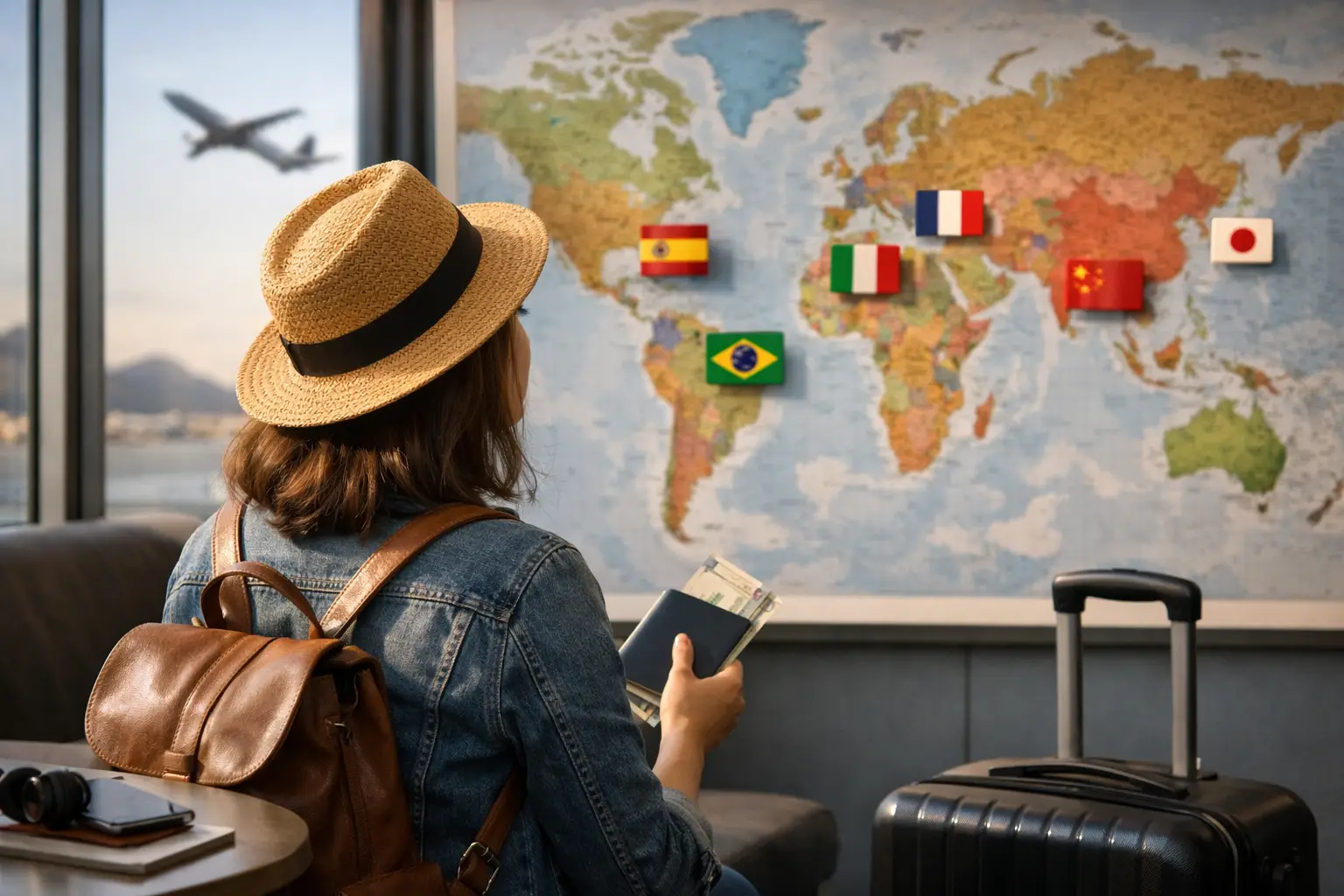
A delayed train announcement, an unfamiliar menu, or a pharmacy visit can quickly reveal the difference between knowing a few travel phrases and being able to communicate. The best languages for frequent travelers are not necessarily the hardest or most prestigious ones. They are the languages that match where you go, help you handle real situations, and give you more independence once you arrive.
For professionals, students, and internationally minded families, the right choice often comes down to travel patterns. A language that supports regular business trips in Asia may be more valuable than one spoken across many countries you never visit. Start with your likely routes, then choose a practical learning goal: asking for help, making reservations, building rapport with clients, or managing daily life abroad.
How to Choose the Best Languages for Frequent Travelers
Reach matters, but it is only one part of the decision. Spanish is useful across a wide range of destinations, for example, while Japanese may bring greater value to someone who visits Japan several times a year. Consider where you travel now, where your career may take you next, and how much time you can realistically devote to study.
It also helps to separate survival communication from meaningful conversation. A phrasebook can cover greetings and directions. Structured lessons help you respond when plans change, understand natural speech, make polite requests, and speak with confidence rather than memorizing a script.
For travelers based in Hong Kong, regional travel is another important factor. Mandarin and Cantonese can be immediately useful for cross-border visits and local life, while English remains a strong foundation for international work and travel. The most effective choice is personal, but these seven languages consistently offer strong practical returns.
1. English: The International Starting Point
English remains the most widely useful shared language for travel. It is commonly used in airports, hotels, international business settings, tourism services, and higher education around the world. Even in countries where it is not an official language, English often provides a starting point when travelers and locals do not share another language.
That does not mean English replaces local languages. Speaking even a few words of Thai in Bangkok or Italian in Rome shows respect and can make interactions warmer. Still, for travelers who need one language that supports a wide variety of destinations, English communication skills are hard to match.
Focus on practical outcomes: explaining a problem to airline staff, participating in a work dinner, making a medical appointment, and understanding announcements. For non-native speakers, clear spoken English and listening confidence usually matter more on the road than perfect grammar.
2. Mandarin Chinese: Essential for China and Beyond
Mandarin is a high-value choice for travelers with regular connections to mainland China, Taiwan, Singapore, and Chinese-speaking business communities worldwide. It can make a substantial difference in restaurants, transport hubs, markets, meetings, and relationship-based business settings where English may not be the preferred language.
The learning curve is real. Pronunciation, tones, and Chinese characters require consistent practice. Yet travelers do not need full literacy before they see results. A solid foundation in pinyin, useful sentence patterns, numbers, directions, food vocabulary, and polite conversation can transform short trips.
Mandarin is especially practical for Hong Kong professionals and families who travel across the Greater Bay Area or want stronger access to regional opportunities. As ability grows, learning to read essential characters adds another layer of independence, from navigating signs to using local services.
3. Spanish: The Broadest Choice for the Americas
Spanish offers remarkable geographic reach. It is spoken across Spain, Mexico, Central America, much of South America, and many communities in the United States. For travelers who enjoy city breaks, beach holidays, family visits, or work across the Americas, it is one of the most flexible languages to learn.
Beginners often gain momentum quickly because Spanish spelling is relatively consistent and many everyday words are easy to pronounce once the sound system is familiar. The key is learning usable Latin American and European variations without getting stuck trying to sound native in every country.
Prioritize conversation that travels well: ordering food, discussing prices, checking into accommodations, describing dietary needs, and making friendly small talk. Spanish speakers generally appreciate a genuine attempt, even when your vocabulary is still limited.
4. French: Valuable Across Continents
French is far more than a language for Paris. It is useful in France, parts of Canada, Belgium, Switzerland, Luxembourg, North and West Africa, and many international organizations. This reach makes it a smart option for travelers whose plans include Europe, Africa, or Francophone business networks.
French can feel challenging at first because written and spoken forms do not always match. Listening practice is therefore essential. Travelers who concentrate only on reading may recognize a sign but struggle to follow a quick reply at a café or station.
A practical French course should build polite communication early. Greetings, forms of address, and courteous requests carry real cultural weight. Knowing how to open a conversation respectfully often matters as much as the exact vocabulary that follows.
5. Japanese: High Impact for Repeat Visits
Japanese may not cover as many countries as Spanish or French, but it has exceptional value for frequent visitors to Japan. It helps travelers move beyond the major tourist areas, understand local etiquette, navigate everyday errands, and form more natural professional relationships.
Japan is easy to visit in many ways, but language ability changes the experience. You can ask detailed questions, understand guidance at smaller businesses, make special requests, and respond appropriately in formal settings. For business travelers, basic Japanese also signals preparation and respect.
Start with spoken Japanese and the writing systems most useful for travel. Hiragana, katakana, common signage, numbers, and simple kanji can be practical early goals. Do not wait until you know every character before speaking. Consistent conversation practice delivers benefits from the first stages.
6. Arabic: A Strong Choice for Regional Business Travel
Arabic is a strategic language for travelers visiting the Middle East and North Africa, particularly those with professional ties to the Gulf. It can support relationship building in markets where personal trust and cultural awareness are central to business.
There is an important trade-off: Arabic has regional dialects, while Modern Standard Arabic is used in formal writing, media, and many official situations. A traveler may learn Modern Standard Arabic for a foundation, then add practical spoken expressions for destinations such as the United Arab Emirates, Saudi Arabia, Jordan, or Egypt.
Even a beginner level can be meaningful. Learning greetings, courtesy phrases, numbers, introductions, and simple questions helps create a more welcoming interaction. For regular travelers, the language also provides a deeper understanding of cultural expectations around hospitality and communication.
7. Thai: Practical for One of Asia’s Most Popular Destinations
Thai is a focused choice, but a highly rewarding one for people who travel to Thailand often for holidays, family, work, or regional events. English is common in major tourist areas, yet Thai becomes invaluable when arranging transport, visiting local neighborhoods, discussing food preferences, or dealing with day-to-day issues outside the usual visitor routes.
Like Mandarin, Thai is tonal, so pronunciation practice should begin early. Listening closely, repeating with a qualified instructor, and learning useful sentence patterns can prevent misunderstandings that a translation app may not catch.
Thai also gives travelers a more personal connection with local people. A polite greeting or clear request in Thai can change the tone of an interaction immediately, particularly when it is delivered with patience and respect.
Build a Travel Language Plan That You Will Use
Trying to learn seven languages at once is rarely productive. Choose one primary language based on your most frequent destination, then set a realistic outcome for the next three to six months. For example, you might aim to handle an airport disruption in English, conduct introductions in Mandarin, or order confidently and ask directions in Japanese.
Your practice should reflect the situations you actually face. Rehearse hotel check-ins, ride-hailing conversations, restaurant requests, client introductions, and emergency questions. Combine vocabulary with listening and speaking, because travel rarely gives you time to translate every sentence in your head.
At International Language Centre, tailored language training can help learners connect study with the places, careers, and experiences that matter to them. The right language is not simply one you can list on a résumé. It is one that lets you arrive prepared, participate fully, and feel at home a little sooner wherever you go.