



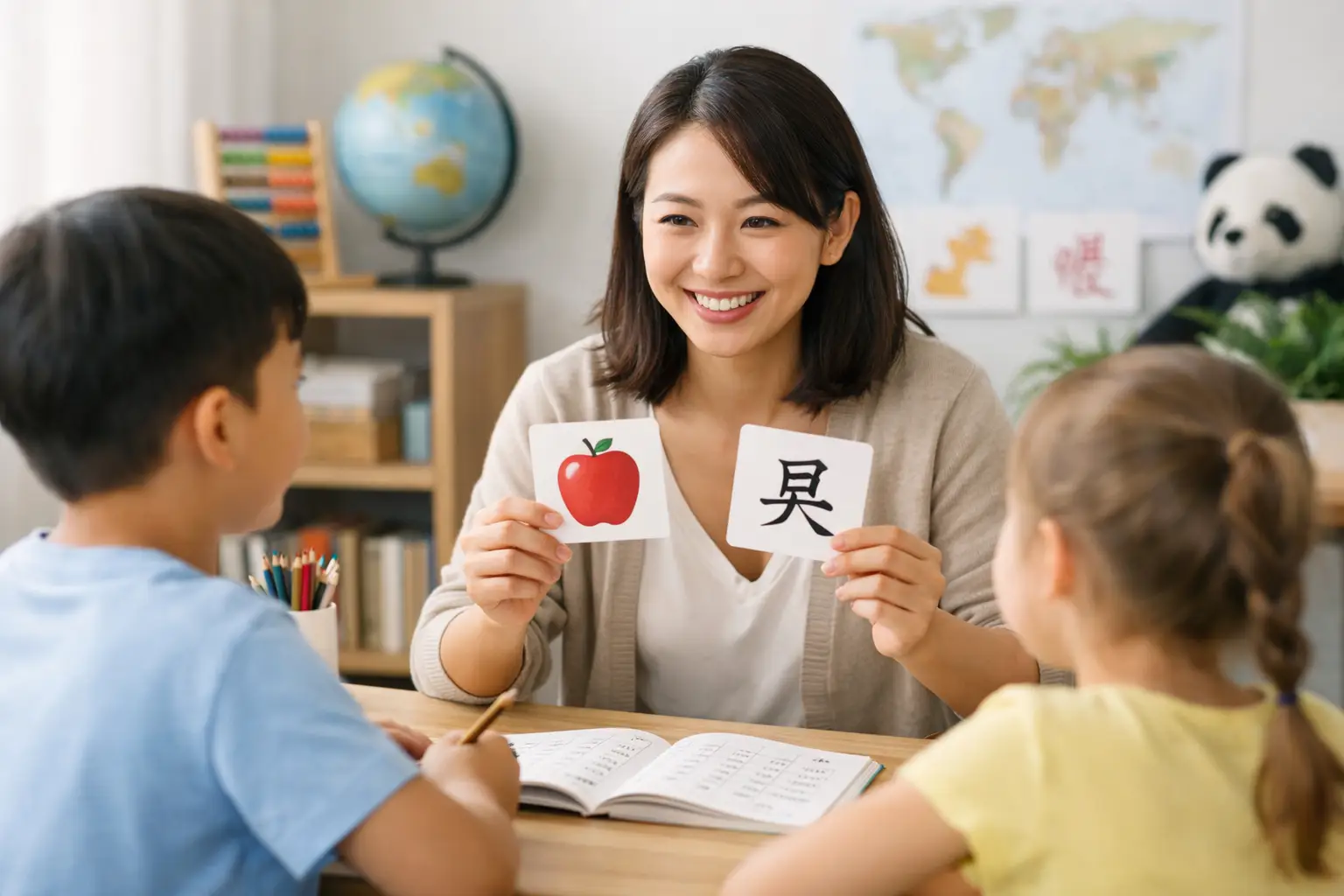
A child who can answer a simple question in Mandarin without freezing is already doing something meaningful. That moment matters more than reciting a long word list from memory. The best children Mandarin classes are not built around pressure or performance for its own sake. They are built around steady progress, real communication, and the confidence to keep going.
For many families, the goal is not just “learn some Mandarin.” It is more specific than that. You may want your child to communicate more comfortably with relatives, prepare for school Chinese requirements, build a strong foundation for future exams, or simply grow up with stronger global language skills. Those goals are different, and the right class should reflect that difference.
What good children Mandarin classes actually teach
A strong Mandarin program for children should develop more than vocabulary. Young learners need balanced exposure to speaking, listening, pronunciation, reading, and, when age-appropriate, writing. If one area dominates too early, progress can become lopsided. A child may recognize characters but struggle to speak, or speak a few memorized lines but not understand natural responses.
The most effective classes create a sequence. First comes listening and speaking confidence, then pattern recognition, then literacy development in a way that feels manageable. This is especially important for children who do not use Mandarin regularly at home. They need repetition, but they also need repetition with purpose.
Pronunciation deserves special attention. Mandarin is a tonal language, so children benefit from early guidance while their ears are still highly responsive to sound patterns. That does not mean every child needs perfect tones immediately. It means they need teachers who can correct gently, model clearly, and help them build good habits from the start.
Why age and background change everything
Not all children learn Mandarin in the same way, and a good academy will not treat them as if they do. A preschooler, a primary school student, and a teenager need very different lesson design.
Younger children usually respond best to movement, visuals, songs, and short interactive tasks. At this stage, attention span matters as much as content. If the class is too academic too soon, children often disengage before they have a chance to enjoy the language.
Elementary-age learners can handle more structure, but they still need lessons that feel active. This is the age when many children can begin connecting spoken Mandarin with characters, sentence patterns, and simple reading tasks. They often progress well when teachers combine routine with variety.
Older children and teens usually need a clearer link between the class and their goals. They may be working toward school performance, Chinese writing ability, or exam preparation. For them, motivation grows when lessons feel relevant and measurable.
Background matters just as much as age. A complete beginner needs a different pace from a heritage learner who understands spoken Mandarin but cannot read. A child in an international school may need support that looks different from a child already taking Chinese academically. One-size-fits-all classes often miss this.
How to tell if a class is helping your child progress
Parents often look for obvious signs such as test scores or completed worksheets. Those can be useful, but they are not the full picture. Real progress in children Mandarin classes usually shows up in smaller, more practical ways first.
A child starts responding more quickly to familiar questions. They use short phrases without being prompted every time. They recognize sounds more accurately. They stop avoiding Mandarin and begin participating with less hesitation. These changes may seem modest, but they are often the early signs of a stronger long-term foundation.
Good programs also make progress visible. That may mean regular feedback from teachers, a clear course pathway, or examples of what students should be able to do at each stage. Families should not have to guess whether lessons are working.
At the same time, speed is not the only measure of quality. Some children need longer to feel secure before they speak more freely. Others move quickly in conversation but need more support with reading and writing. A reliable program tracks development across skills instead of chasing fast but shallow results.
What to look for in children Mandarin classes
The strongest classes combine structure with encouragement. Structure gives children a clear path. Encouragement gives them the confidence to stay on it.
Start with teaching quality. Instructors should know how to teach children, not just Mandarin. That sounds obvious, but it is a real distinction. Teaching young learners requires pacing, classroom management, correction techniques, and the ability to make language understandable without oversimplifying it.
Next, look at class design. Small groups can work very well when students are reasonably matched by age and level. They give children interaction, listening practice, and the chance to learn alongside peers. Private lessons can be the better choice when a child has a very specific goal, needs accelerated support, or learns best with individual attention. Neither format is automatically better. It depends on the learner.
Curriculum matters too. A strong curriculum should build skills step by step, rather than jumping between disconnected activities. Children benefit when each lesson reinforces previous material while introducing something new. That sense of continuity helps them retain what they learn.
Parents should also ask how classes handle reading and writing. Some programs introduce characters gradually, while others place heavier emphasis on literacy from the beginning. The right balance depends on your child’s age, school context, and goals. If your child needs Mandarin for communication first, spoken confidence may need to come before intensive writing practice.
The role of motivation and confidence
Children rarely stay committed to a language because adults tell them it is useful. They stay committed when they feel capable. Confidence is not a soft extra in language learning. It is a core driver of progress.
That is why classroom atmosphere matters so much. If a child feels constantly corrected, rushed, or compared to stronger classmates, they may withdraw even if the teaching is technically sound. On the other hand, a class that is warm but unstructured may feel pleasant without producing much growth. The balance is important.
The best teachers know how to challenge students without making them feel defeated. They correct clearly, celebrate improvement, and keep expectations realistic. Over time, children begin to associate Mandarin with achievement rather than stress.
This matters especially in busy family schedules. When children already have school demands, extracurricular activities, and homework, Mandarin lessons need to feel purposeful. Families are more likely to stay consistent when they can see confidence building alongside skill development.
Choosing a program that fits your family
A good class on paper is not always the right class in practice. Scheduling, location, lesson frequency, and learning format all affect whether a child can make steady progress.
For some families, once-a-week group lessons are a strong starting point. For others, a mix of group learning and 1-to-1 support may be more effective, especially if the child needs help with academic Chinese or specific school requirements. Flexibility matters because consistency matters.
In Hong Kong, many families are balancing multilingual environments, international school expectations, and long-term academic planning. That makes it even more important to choose a program that understands practical language outcomes, not just textbook coverage. A child may need spoken Mandarin for everyday confidence now and stronger literacy later. A quality academy can help map that path clearly.
If you are evaluating options, ask direct questions. What outcomes should a child expect after one term? How are students grouped? How is progress shared with parents? How does the program support beginners versus more experienced learners? Clear answers are usually a sign of a well-run course.
For families looking for a structured path with flexible formats, International Language Centre offers children’s Mandarin training designed around real progress, age-appropriate teaching, and practical communication goals. You can learn more at https://www.international-lan.com.
When exam goals enter the picture
Not every child needs exam preparation right away, but some do. If your child is working toward school assessments or future qualifications, the class should address that goal without turning every lesson into test drilling.
Exam success in Mandarin depends on underlying language ability. Memorization can help in the short term, but it has limits. Children do better when they understand sentence patterns, recognize vocabulary in context, and can use the language actively. A program that builds those habits early often supports better academic performance later.
That said, exam-focused learners may need additional writing practice, reading comprehension work, or more formal vocabulary development. The ideal approach is targeted, not overwhelming. Children should feel stretched, not buried.
A better question than “Is Mandarin worth it?”
For many families, the more useful question is this: what kind of Mandarin learning experience will help my child keep going long enough to become capable? That is where the real decision sits.
Children Mandarin classes work best when they are thoughtfully matched to the learner in front of them. The right program respects age, level, personality, and goals. It builds speaking confidence without neglecting literacy. It gives families visibility into progress. Most of all, it helps children see Mandarin not as a hurdle, but as a skill they can truly own.
When that shift happens, language learning stops being another item on the calendar. It becomes part of a child’s future options.